The U.S. Army Encountered Subterranean Reptilians While Stationed in Vietnam

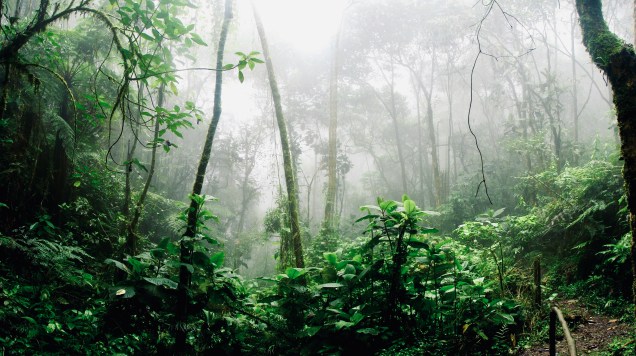
Over half a century ago, the United States was in a seemingly endless war with Vietnam. Over two million young men were drafted and sent to the lush green jungles of Southeast Asia. Those deployed quickly learned about the horrors of modern combat. Millions of innocent civilians lost their lives and 58,220 Americans died in battle. Military personnel who survived the gruesome conflict returned with physical and emotional scars. All shared harrowing firsthand stories about fighting ruthless militias. However, one soldier’s astonishing experience stands out from typical veteran accounts. What he encountered during a routine mission would haunt him for the rest of his life.

Soldiers on Patrol

1970 a U.S. Army corporal was stationed thirty miles from the demilitarized zone in Southern Vietnam. ‘John’ and his team were tasked with constructing bivouac sites throughout the region. One evening he was patrolling the area in search of enemy troops. After steadily marching through dense brush the group noticed scattered movement nearby. Each man instinctively braced for armed revolutionists. While hunkering down, sporadic blurs of swift motion could be seen in the dark valley ahead. Within 15 minutes, the activity ceased so they continued trekking. Moonlight illuminated the rugged terrain as John sauntered forward. In front of him were rocks and boulders unnaturally stacked next to a peculiar structure.

Continue reading

Are These Ancient Relics Proof of Reptilian Beings?

Tales of reptilian beings date back thousands of years and span across nearly every continent on Earth. Diverse cultures with no contact or communication with one another all describe nearly identical entities. Mayans revered an enlightened god known as the ‘serpent of wisdom’. Hopi legends in North America chronicle divine ‘snake brothers’ who lived in deep underground cities. Asian mythology connects royal bloodlines to a race of dragons. Aboriginal creation lore revolves around Ngiṉṯaka, a giant lizard. In addition to oral fables and written texts, our ancestors left physical evidence of these otherworldly visitors. Here are some intriguing examples of ancient relics depicting saurian humanoids.

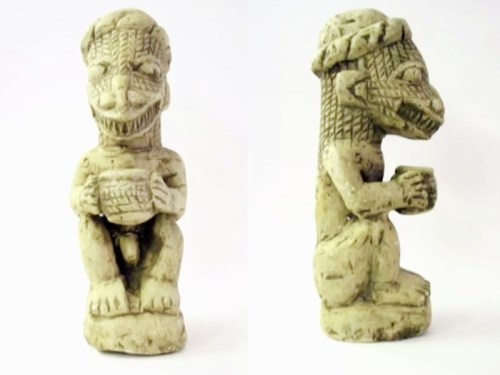
Nomoli Talisman

Bizarre soapstone carvings were unearthed in Sierra Leone, West Africa. Legends from this region refer to a sinister draconian force that control the planet.

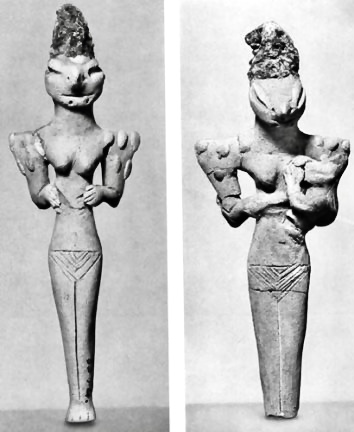
Ubaid Lizard

Archeologists discovered eerie statues in modern-day Iraq. They are estimated to be over 7,000-years-old and depict an unknown species.

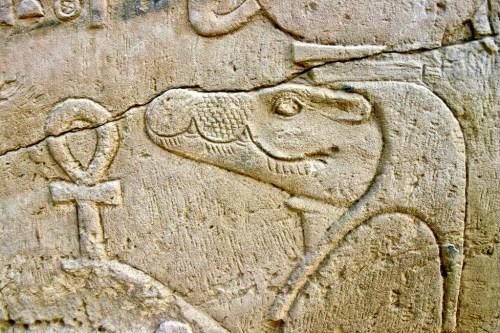
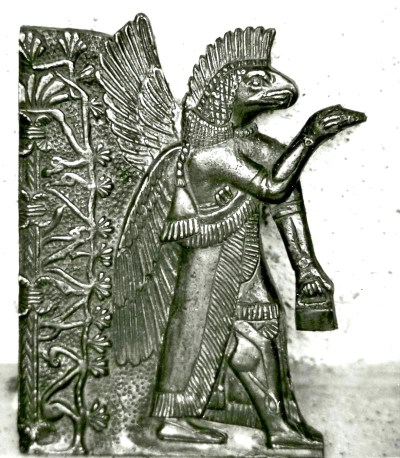
Egyptian Wall Relief

Adorning an ancient pyramid is a rendering of Sobek, a revered and highly intelligent being. Accounts of the powerful crocodile hybrid date back to 2686 BCE. 

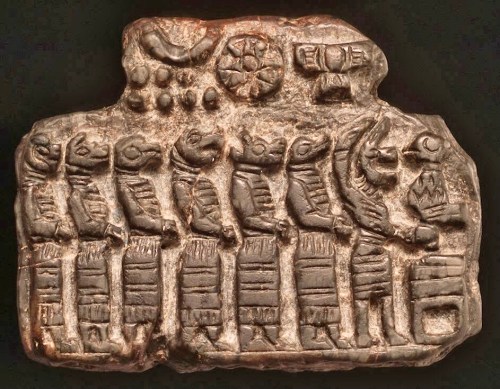
Sumerian Tablet

Peculiar beings are present in this unusual engraving. According to ancient texts, the Anunna originated from outer space before colonizing Earth. 

Father Crespi Collection

In the early 1900s, an Italian priest discovered an unusual relic deep within an Ecuadoran cave. It resembles an iguana-like Annunaki god.

Continue reading

Reptilian Beings Emerged During Government-Funded Psychedelic Studies

Mankind has chronicled reptilian beings throughout history. Archeologists unearthed 7,000-year-old humanoid lizard statues in Mesopotamia. Vedic scriptures depict the Naga as a shapeshifting serpentine breed. Zulu shamans believe the world is controlled by Chitauri, a sinister saurian force. Ancient Sumerians wrote about a powerful and manipulative group of extraterrestrials called the Anunnaki. Indigenous Central American tribes worshipped the snake god Quetzalcoatl. In Asia, ruling emperors descended from the ‘dragon’ bloodline. Most skeptics dismiss these stories as mere mythology and cultural lore. However, one group of scientists discovered evidence that our ancestors witnessed legitimate lacertids. Stranger yet, they concluded the enigmatic species continues to exist in modern times.

A five-year study on DMT revealed a consistent experience amongst users.

In 1990 groundbreaking research began at the University of New Mexico. Federal government funding had been allocated to investigate N, N-Dimethyltryptamine, the most powerful psychedelic on planet Earth. Also known as DMT or the ‘spirit molecule’, it is a naturally occurring chemical compound that can be found in both plants and animals. Rick Strassman, a highly respected medical doctor and associate professor of psychology, conducted the clinical trials. He administered over 400 injections to 60 diverse test subjects. What was disclosed during the five-year project would permanently alter his perception of reality.

The Participants

Voluntary candidates underwent a rigorous vetting process. Each received full psychological evaluations to ensure they were of sound mind and had no underlying mental illness. Upon completion of the initial screenings, physicians performed detailed physical examinations. Laboratory tests and electrocardiograms verified who possessed optimal physical health. An initially large number of prospects was whittled down to a final group of carefully selected examinees. Age, gender, ethnicity, occupations, and religious beliefs varied widely. To remove external influences and maintain environmental control, participants did not have any contact or communication with one another.

A Double-Blind Study

Sessions took place in a clinical hospital setting. Medical staff injected the drug intravenously and doses varied with each session. Researchers wanted the unsuspecting recipients to avoid developing any preconceived expectations. Nurses closely monitored the patient’s vitals including temperature, heart rate, and blood pressure. During certain experiments, pupil dilation was also measured. Twenty minutes after receiving the infusion, Dr. Strassman questioned them about their experiences. Respondents were asked what they felt, heard, tasted, smelled, and observed. A startling revelation soon surfaced: more than half of the volunteers described encountering nearly identical reptilian entities.

Continue reading

The Blackbird of Chernobyl: Russia’s Mothman

Most cryptozoology enthusiasts are familiar with Mothman— the humanoid beast said to be a herald of impending doom. But did you know that Russia is home to a nearly identical creature?

On April 26th, 1986 a horrific nuclear accident occurred at the Chernobyl Power Plant. Reactor Number 4 became catastrophically unstable after employees performed a simulative power outage safety test. A disastrous series of events unfolded which caused an uncontrollable chain reaction. Colossal amounts of energy were released causing the activator core to explode. For nine days, fire consumed the devastated structure and spewed out astronomical levels of radioactive contaminants. Humanity felt the dire implications of a fission calamity. Dozens of first responders agonizingly perished from radiation exposure, cancer rates skyrocketed and babies were born with appalling birth defects. Pripyat, a once-thriving city, had become an uninhabitable toxic wasteland and would remain so for the next twenty-thousand years.

reactor
Staff members at Chernobyl watched in horror as Reactor 4 exploded.

Some believe residents had been pre-warned of the dreadful fallout. In the weeks preceding Chernobyl’s cataclysmic incident, a series of anomalous episodes took place. Locals who lived in close proximity to the eventual ‘exclusion zone’ repeatedly encountered a mysterious creature. Witnesses described its appearance as resembling a giant mutilated headless man with piercing red eyes. Petrified onlookers dubbed the curious aerial fiend The Blackbird of Chernobyl. Those who happened upon the sinister entity suffered from haunting nightmares and menacing phone calls. Citizens began to live in constant crippling fear that they may be the next victim to behold this nefarious figure. An abysmal winged monster was terrorizing the formerly quaint town.

Continue reading

US Army Corps Announces Bigfoot is a Legitimate Species

For decades, the existence of Sasquatch has been highly debated. Skeptics scoff at the idea of North American bipedal hominids while believers cite supporting evidence including print castings, hair samples and video footage. Sightings of these enigmatic forest dwellers date back centuries, spanning across nearly every continent on Earth. However, society continues to dismiss the cryptid as merely a mythological creature or hoaxer’s feeble attempt at trickery. Yet would public perception shift if government agents produced a document listing Bigfoot as a legitimate species? Several decades ago, that precise scenario occurred.

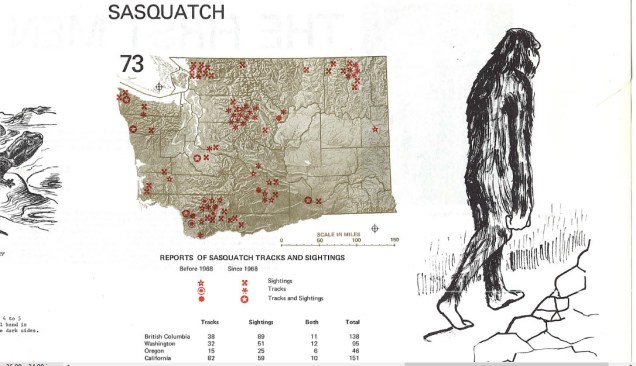
In 1975 the United States Army Corps of Engineers debuted Washington Environmental Atlas, a manual which provided comprehensive information about the region. The book required over three years of research and a budget of $200,000 (which inflation equates to nearly one million dollars in 2019). Comprising the 114-page encyclopedia are maps, geological data, and zoological reports. An excerpt from the paperback declares: “The Washington Environmental Atlas identifies and describes many resources and amenities important to the citizens of the State of Washington. The environment is described not only in terms of the preferences and values of people and agencies, but also in terms of the structure and function of basic ecosystems. Accordingly, significant effort was devoted to a map overlay of ecological life zones, species lists and habitats.”

2018-02-13_9-54-23.jpg
A page from the Washington Environmental Atlas which provides detailed information about Sasquatch.

Continue reading

Bizarre Beasts of Cryptozoology

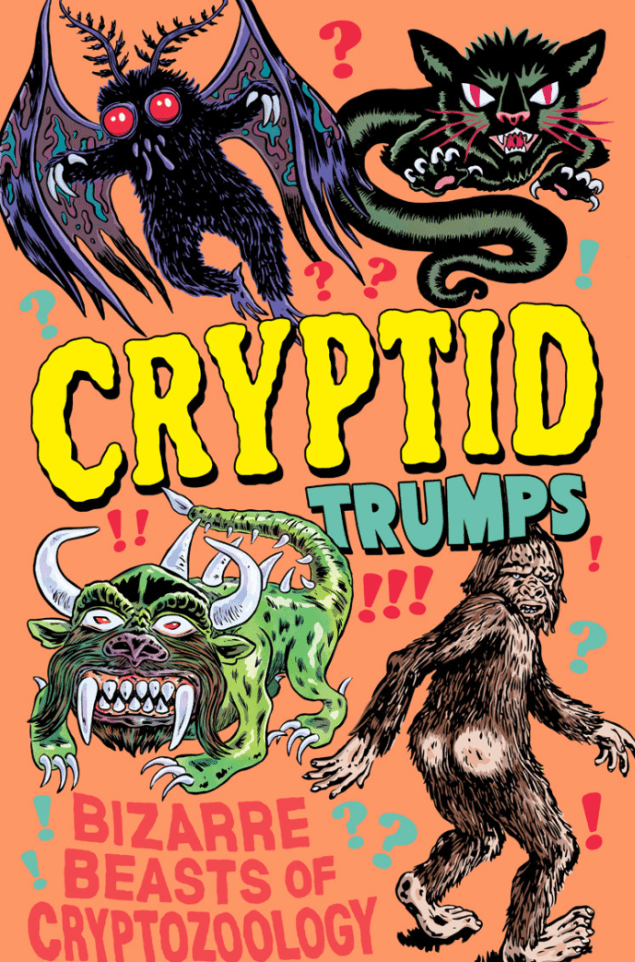
For those of you who are unaware, ‘Down the Chupacabra Hole’ is a play on Alice in Wonderland’s magical imagery. After all, the concept of entering a previously hidden word where things aren’t quite what they seem rings true for conspiracy theorists. For nearly two years, I have envisioned a chupacabra-white rabbit hybrid greeting readers who stumble upon my little corner of the internet. I am happy to announce we finally have our official mascot!  Thank you to the wonderful Gazoo Shop who created such incredible artwork for DTCH. They specialize in animations, photography, graphic design and video production. If you’re a fan of enigmatic undiscovered species, you’ll love Gazoo’s other illustrations. 

IMG_0232

Continue reading

Mongolian Death Worm: the Gobi Desert’s Killer Cryptid

Landlocked between Russian and Chinese borders sits the picturesque country of Mongolia. Most associate this part of the world with Genghis Kahn, Tuvan throat singing  or delicious cuisine. Encompassing the southern region is the Gobi, one of Earth’s largest deserts. The barren East Asian tundra spans across over half a million square miles. Temperatures here are extreme and range from 120 degrees Fahrenheit to well below freezing. Other perils include poisonous scorpions, seasonal flooding and fierce sandstorms. Despite extremely harsh conditions, many animals thrive here. Gazelle, bear, marbled polecats, jerboa, and highly endangered snow leopards inhabit the inhospitable terrain. Some say there is an unknown species also residing in the Gobi- a killer cryptid known as the Mongolian death worm.

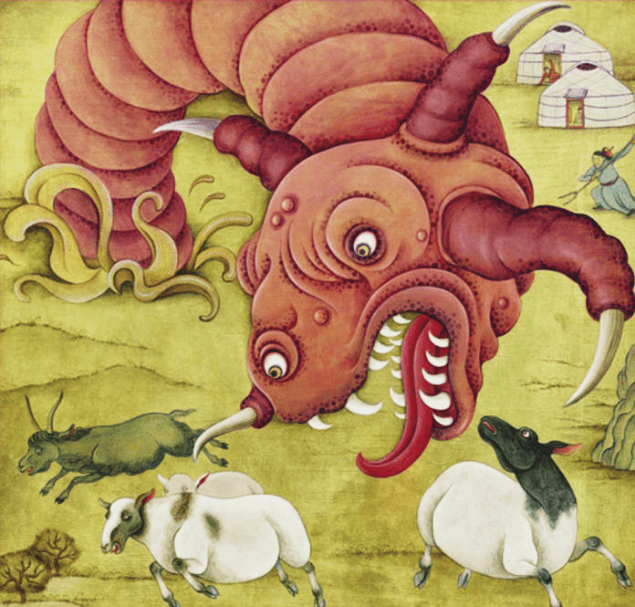
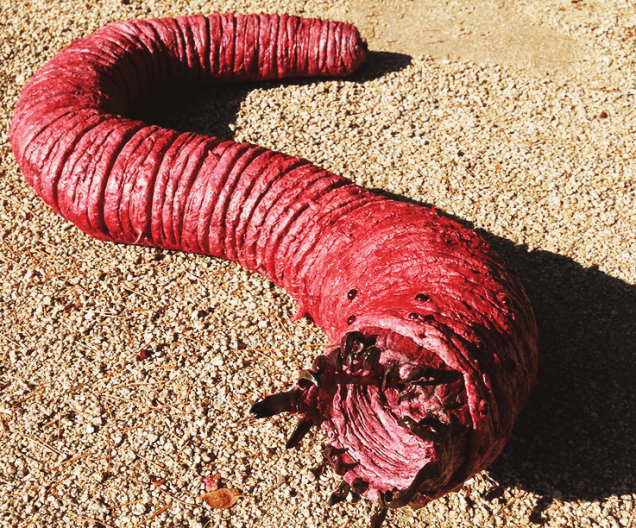
Locals call the creature olgoi-khorkhoi, which translates to “intestine worm”, a name derived from its visceral appearance. Based on eyewitness testimonies, death worms are said to reach five feet in length with large spikes protruding from both ends. Indigenous people claim the invertebrates lay eggs inside of a camel’s stomach. Upon hatching, they absorb the color of their host’s blood and results in brightly saturated red-hued bodies. Simply brushing against the parasite results in excruciating pain and a near instantaneous demise. Reportedly, the soil-inhabitant can also kill prey from a distance, through shooting an electrical discharge or by spitting lethal venom. Those who are stricken by the deadly spray turn a sickening shade of yellow before perishing.

IMG_9615
The Gobi is one of the largest deserts on Earth and covers over 500,000 square miles.

Death worms live underground and create distinctive waves of sand upon the surface whilst roaming. For ten months of the year, they hibernate and then become active in June and July. Native Mongolians report seeing the creatures surface after heavy rainfall. If larger food sources are unavailable they will consume rodents and other types of vermin. It is believed the appendage-lacking brutes are exoskeletal and shed their skin when in danger. Researchers speculate it may be an amphisbaenidae, a carnivorous reptile better known as worm lizards. These burrowing saurians reside throughout sub-Saharan Africa, South America, and several Caribbean islands.

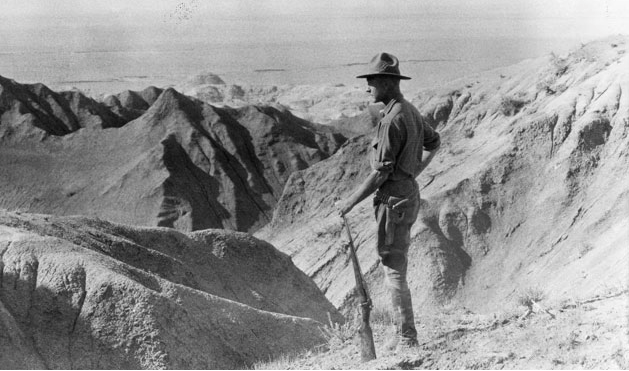
Westerners first heard of death worms in 1926 following the release of On the Trail of Ancient Man, a book written by American paleontologist Roy Chapman Andrews. Four years prior to his publication, Andrews joined the American Museum of Natural History’s Central Asiatic Expedition. Government officials had alerted the United States institution of a terrifying legless serpent wreaking havoc in rural areas. Even Mongolia’s leader wholeheartedly believed in its existence. Prime Minister Damdinbazar publicly stated: “It is shaped like a sausage about two feet long, has no head nor legs and it is so poisonous that merely touching it means an instant death.” Such a prominent and highly respected figure speaking openly about a supposedly mythical breed greatly piqued the museum’s interest.

Roy Chapman Andrews.png
Roy Chapman Andrews was an explorer and adventurer who inspired the character Indian Jones.

Prior to the group’s historic embarkment, a mandatory cabinet meeting was required. Professor Andrews and foundation representatives met with the Minister of Foreign Affairs as well as the Mongolian Premier himself. Permission for their extensive undertaking was only granted on the condition they would obtain a specimen of Allergorhai horhai. Upon both party’s agreement, the journey commenced. Throughout the 1920s a team scholars combed the Central Asian plateau in its entirety. While hunting for the enigmatic wriggler, Andrews became the first person to discover fossilized dinosaur eggs. Regardless of being unable to find evidence during their search, the archeologist stated every person gave a nearly identical description, down to the most “minute detail”.

Andrews was not the only explorer to seek the elusive ground-dweller. Ivan Mackerle, esteemed cryptozoologist and a leading expert on the Loch Ness Monster, traveled to Mongolia in pursuit of olgoi-khorkhoi. Mackerle visited the territory in 1990, 1992 and 2004 to interview nomads. An elderly woman shared several encounters she heard from local fishermen. When stalking prey, the creature will move half its body above the sand. Then their upper half begins to inflate and a toxin-filled bubble forms and is used to spew venom at unsuspecting victims. Although the questioned senior citizen appeared incredibly sincere, she admitted her information was based on others’ experiences.

IMG_9612.PNG
Nomadic tribespeople were terrorized by a creature called olgoi khorkoi.

One particularly intriguing account involved a small boy who was playing with his bright yellow ball, which unfortunately caught the limb-lacker’s attention. Gobi residents claim this particular color attracts the slithering beast. When the curious youngster approached it, he reached out and gently stroked the flesh. Within mere seconds the unsuspecting child was deceased. His parents soon discovered their son’s corpse and immediately recognized the post-mortem symptoms. Furious and grief-stricken, they decided to hunt for the slug-like perpetrator. Neither parent ever made it back to the village alive. Townspeople suspected they had been killed by the vengeful fiend.

During his final voyage, Mackerle became familiar with another layer of the centuries-old enigma. While visiting a Buddhist monastery he was warned of writhing executioners’ supernatural abilities. Monks believed the ferocious annelids were filled with evil energy. Stranger yet, they advised the investigator that a firsthand encounter would destroy him. In spite of brushing off their ominous words, Mackerle suffered from terrifying nightmares about wriggling crimson carnivores the same evening. Upon waking, he felt a burning sensation on his back. Covering his flesh were dozens of inflamed boils. None of these painful wounds were present hours earlier and could not have been inflicted by any known insects. Mackerle was convinced his affliction was caused by the wicked one’s spirit. In fact, the researcher was so traumatized by this incident that he never returned to Mongolia.

ancient-architecture-art-161183 (1).jpg
Buddhist monks believe death worms were an evil entity that should be avoided.

Zoological director, Richard Freeman, was captivated by tales of the massive oriental grub. In 2005 his organization, Centre for Fortean Zoology, ventured to the eastern sector. Freeman soon learned the cryptid is very much real to nomadic tribesmen. His interpreter informed him of an entire village shifting positions after local inhabitants set eyes upon the terrifying scarlet monster. Over 1,000 miles of the Gobi were scoured by investigators in hopes of unearthing proof of death worms. Excursion members came up empty-handed but Freeman firmly believes verification has not come forward for strictly political reasons. From 1945 through 1990, Mongolia was under communist rule. Throughout the decades-long reign, authorities criminalized searching for the leech-entity. Those in power insisted aforementioned endeavors were a waste of resources since the animal “did not exist”.

Nearly a century after the initial quest for Mongolia’s murderous maggot, more questions than answers still remain. Countless individuals have embarked on nearly identical crusades only to return empty-handed. Scientists argue the geographic environment rules out any possibility of annelid or nematode presence. High temperatures and an arid setting do not support the theory of such lifeforms’ existence. If an unknown species is inhabiting the Gobi it’s more likely a class of burrowing lizard. Cryptozoology enthusiasts remain open-minded citing complications have hindered any discoveries. Given the desert’s precarious surroundings, a lack of human population and restrictions to the area, it’s entirely plausible an unidentified living organism has simply avoided detection. However, until conclusive evidence comes forward, olgoi-khorkhoi will remain a mystery.

IMG_9619-2
Death worms are thought to surface only two months of the year.

Do you believe the Mongolian death worm exists or is it merely a mythical legend? I’d love to hear your thoughts on this bizarre cryptid.

The Russian Navy Divers who were Attacked by Aquatic Aliens [Lake Baikal Humanoids]

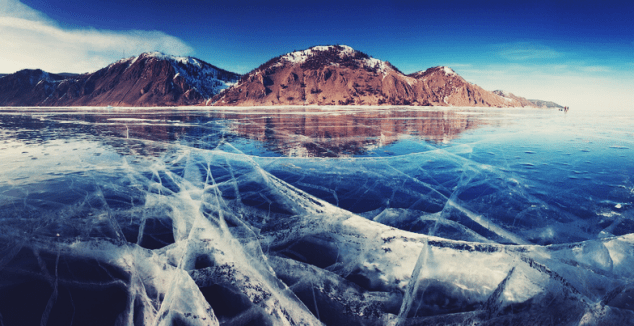
Located in southeastern Siberia, towards Mongolia’s border, sits the planet’s oldest and deepest lake. Nearly one-quarter of Earth’s fresh water is contained here. Astonishing depths of over five thousand feet have been measured in certain areas. A myriad of unique plant and animal species inhabit the frigid territory, many of which exist nowhere else in the world. Scientists estimate this massive basin formed as an ancient rift valley more than twenty-five million years ago. For centuries, Lake Baikal has been home to a plethora of unexplained phenomena. Locals claim countless peculiar UFO encounters frequently occur within this remote region of Russia. Some theorize an extraterrestrial base is lurking beneath the picturesque exterior.

One of the most bizarre reports occurred in 1982 during a routine Soviet military training dive. While navigating the foreboding aquatic realm, Navy personnel noticed anomalous figures swimming nearby. Perplexed, they watched in bewilderment as several curious creatures approached them. Despite being stationed at a depth of over one hundred and sixty-four feet, these humanoids wore no modern equipment. Each donned tight-fitting metallic suits complete with a helmet-like apparatus completely covering their heads. Upon closer inspection, troopers noticed the aliens were nearly ten feet tall. However, the colossal loch-dwellers soon disappeared back into the murky abyss.

AdobeStock_62687098.jpeg
Seven Russian Navy divers were attacked by a group of hostile extraterrestrials.

Following this eerie run-in, the intrigued commander ordered his recruits to capture a subaqueous alien. Seven Scuba divers entered the glacial lake and began their harrowing descent. Soon after navigating an elevator of declining temperatures, multiple entities emerged. One frogman attempted to catch the unearthly specimen in a large net. At that moment, all hell broke loose for the unsuspecting flotilla group. Suddenly the nonhuman brutes fought back by shooting intense sonar waves from strange devices. A powerful force rendered every crew member unconscious and rapidly propelled them to the surface.

Catapulting upwards from extreme depths can have devastating effects on our bodies, resulting in a condition often called “the bends”. Three of the squadron were seriously injured but did not succumb to this affliction. The remaining fellows needed immediate transfer to a decompression chamber. Unfortunately, there was only one chamber in the region and it was designed for merely two people at a time. Out of sheer desperation, four men entered simultaneously in an attempt to save their lives. Tragically, this last-ditch effort did not go as planned. Three individuals perished as a result of their superior’s hasty decision. Those who survived the terrifying ordeal would be left with life-altering disabilities.

iStock_40908774_SMALL.jpg
UFO sightings occur at extremely high rates throughout the Baikal area.

Following this harrowing catastrophe, KGB agents ceased further attempts of USO (Unidentified Submerged Object) acquisition. For decades the horrifying events which transpired remained hidden by high-ranking authorities. Vladimir Azhazha, former Soviet Naval officer and esteemed ufologist, declared Russian government executives recently released declassified files. In these documents, the Baikal aquanauts are described in great detail. Unsurprisingly, Navy commanders had been extensively monitoring numerous underwater vehicles navigating the lake. Such technological capabilities greatly intrigued them; if engineers could replicate the vessels’ inconceivable speeds, unprecedented militaristic advantages would be gained.

Throughout the eras, Baikal has been no stranger to mysterious UFO activities. During the late 1950s a TU-104 jet crashed into the lake after it was pursued by an unknown metallic vehicle. The frantic pilot radioed a distraught message to air traffic controllers informing them of this alleged attack. According to informants, all staff on duty at the time were forced to sign non-disclosure agreements. Numerous community fisherman attested to viewing the frightening areal attack. Anglers described how a silver flying saucer chased a plane until it plummeted into the water and disappeared from their sight. Despite considerable testimonies, no conclusive evidence or official records of this event have ever surfaced.

ISS019-E-010556_lrg.jpg
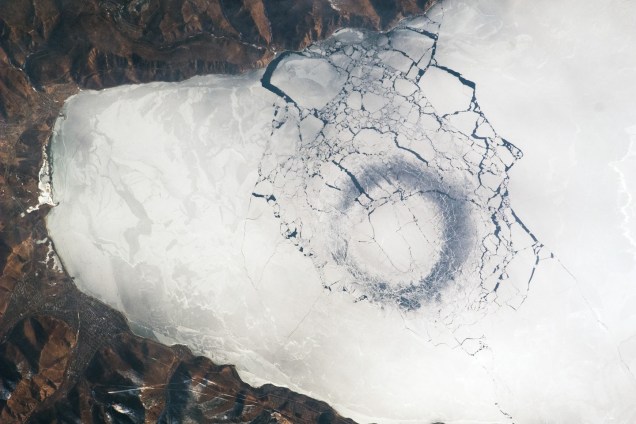
NASA released photos taken from the International Space Station in 2009. Some believe they show a USO emerging from the water.

In April of 2009 the enigmatic Siberian sector made global headlines yet again. Astronauts aboard an international space station photographed two circular convection breaks, thought to be produced by enormous aquatic crafts. One was located near the lake’s center while the other was positioned towards Baikal’s southern end. Both appeared to be created by something ascending beneath the thick ice-laden outer layer. The pair of disk-shaped cracks were perfectly symmetrical and astonishingly measure three miles in diameter. These immense fractures were so precise making them impossible to manufacture or replicate. Certain researchers believe the NASA-produced images are evidence of spaceships emerging from the dark waters below.

Yet another unsettling occurrence took place in 2011 when an alien body was discovered. Footage shows one Irkutsk resident guiding the camera man towards a forested area. Atop the snow-covered ground lays a small extraterrestrial. It possesses an enlarged cranium, opaque grayish body and dark eyes blankly staring ahead. Something appears to have ripped off the creature’s right leg. Amid this expletive-laden footage, our winter-clad host explains how his dog sniffed out the captivating cadaver. Mere weeks before the chilling scene was filmed, dozens of villagers witnessed unidentifiable lights hovering above their homes. Conspiracy theorists speculate a UFO crash may be responsible for the macabre martian corpse. Viewers are torn regarding the authenticity of the video; some believe a genuine unknown species was uncovered while others blame crafty cinematic hoaxers.

The-truth-of-Roswell-Alien-Autopsy-video
An bizarre video surfaced in 2011 which appears to show the corpse of a small extraterrestrial.

As time progresses, onlookers continue to be dazzled by the obscure skies. Intriguing incidents take place at staggering rates across the district’s vicinity. In this technological era where most people are never without their smart phones, more of these perplexing crafts are captured and shared via the web. One such example happened in October of 2016 while spectators observed extraordinary green flashes above their rural town. Bystanders and experts alike were baffled by the unusual scene. Such remarkable sightings and otherworldly happenings have even caught the eye of famed director, Steven Spielberg. The film tycoon intends to create a documentary titled “Depth 211” which will explore Lake Baikal’s baffling history.

Only four years ago, Prime Minister Dmitry Medvedev made a shocking announcement at the World Economic Forum. In his public statement he lamented how “the time has come” for the world to know the truth about extraterrestrials visitors. In fact, Mr. Medvedev believes aliens are already living amongst us and have been doing so for quite a while. Even more brazen, the political leader warned if United States officials refuse come forward with this monumental information, Russian representatives will do so themselves. Given recent ufology-related announcements and unveiled files, it is entirely plausible that the Kremlin is gearing up for full disclosure. Perhaps sooner than we may think the astounding truth of interplanetary beings will finally be acknowledged by those who have known all along.

IMG_9424.PNG
Lake Baikal has been home to a plethora of unexplained UFO activity for decades.

Do you believe that Lake Baikal is harboring an underwater base? Share your opinions in the comment section and let me know your thoughts on this fascinating topic!

Expedition Skunk Ape: Searching for Florida’s Bigfoot

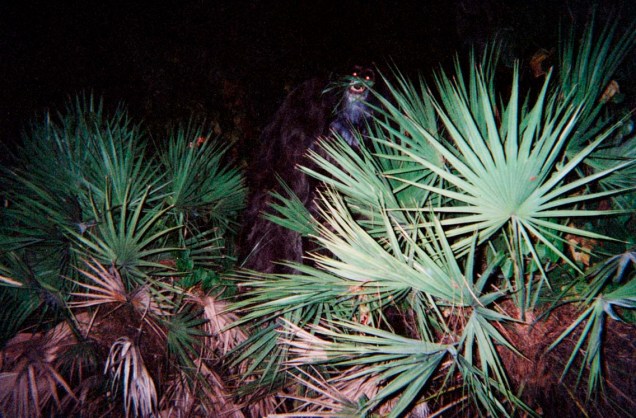
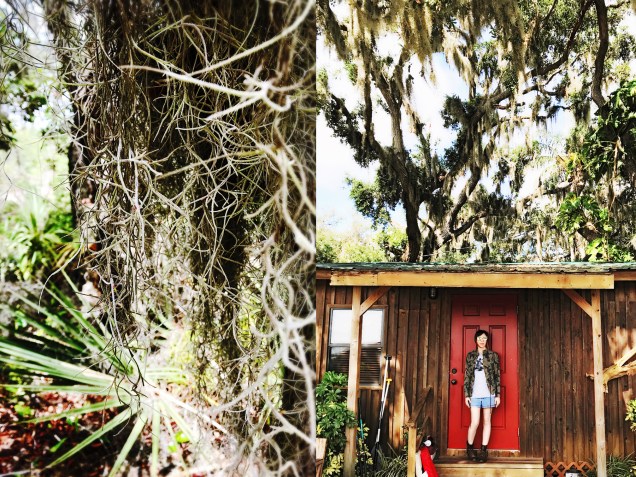
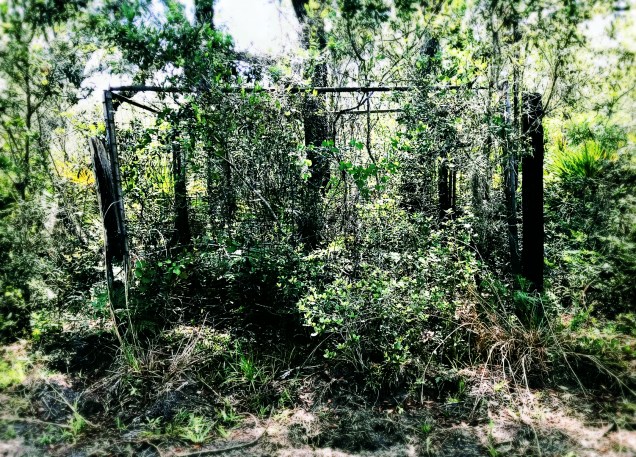
When one thinks of the Sunshine State three things typically come to mind: Disney World, spring-breakers and elderly retirees. Yet most vacationers never set foot outside the infamous amusement parks or pristine beaches. Just beyond major tourist destinations are millions of undeveloped wetland acres. Gators, Burmese pythons, wild boar and endangered panthers call the region home. Some individuals claim that there is another species inhabiting Florida’s swampy terrain, an unaccounted Bigfoot-like creature called Skunk Ape.bright-dawn-evening-1096038 Native tribespeople were familiar with this beast long before European explorers arrived. According to Seminole legend, a monstrous being referred to as ‘hairy man’ roamed the encompassing bush. Supposedly, in the early 1800s, one particularly violent battle between early settlers and a Skunk Ape resulted in several men’s fatalities. Encounters with the elusive cryptid continued for centuries but gained notoriety after a series of sightings occurred over sixty years ago. On December 22, 2000, Sarasota County Sheriff’s department received two mysterious photographs from an anonymous source. Dubbed the “Myakka Skunk Ape Photos,” these unnerving images depict a large bipedal hominid. Accompanying the peculiar portraits was a letter from the photographer. She identified herself as a senior citizen who snapped several pictures in her backyard and had concerns for the safety of her young grandchildren.myakkaape2 Witnesses describe the bog-inhabitants as having muscular bodies covered with red-tinged fur. They are estimated to reach heights of over seven feet tall and weigh a staggering four hundred and fifty pounds. Many who have experienced firsthand nocturnal confrontations recount glowing red eyes. Skunk Ape’s name derives from its unpleasant scent. Those within close proximity frequently report a strong foul-smelling odor, similar to methane gas or rotten eggs. Over three hundred and twenty observational reports have been filed with the Bigfoot Field Researchers Organization. Washington, California and Florida, respectively, comprise the top three states where Sasquatch sightings most frequently occur.1My partner, Clint, and I traveled to an undisclosed rural Southwestern location in search of the reclusive animal. Our tightly packed truck more closely resembled a circus clown car than an expedition vehicle. With enough supplies to survive post-apocalypse, the journey away from civilization began. Idly peering out the passenger-side window, I realized this landscape was a stark contrast from my days on the Jersey Turnpike. A seemingly infinite mosaic of picturesque farmland and grazing cattle sprawled hypnotically. As the miles progressed, my mind drifted into daydreams of Skunk Ape. If this revered brute truly exists then it most certainly could thrive in such a remote place.2 Suddenly my cryptozoological musings abruptly halted as we made a sharp righthand turn. Completely covering the bumpy dirt road was a thick oak hammock canopy. Spanish moss hung from twisted tree limbs and created a hauntingly beautiful scene. In the distance we could see a quaint lakeside cabin; we finally reached the destination. Our fearsome protectors, two toothless senior chihuahuas, curiously inspected their new territory. While we unstrapped our canoe from the roof racks a back-woodsy looking woman slowly approached us. “Y’all taking that thang out on the water?”, she asked through her thick southern drawl. Confused, Clint replied we were planning to, and asked her if there was problem. The woman laughed and said, “Naw, it’s fine but I seen gators here bigger than that dingy”. It wouldn’t be long before we realized this lady wasn’t exaggerating.twoLater that night I sat alone on the front porch serenaded by a symphony of crickets, tree frogs and howling coyotes. Thousands of stars shimmered above casting an ethereal glow atop the water’s rhythmic surface. Despite the balmy and tropical evening temperatures, there was a deep chill which I could not ignore. An unshakeable sensation washed over me: something had been closely watching. Leering from the abysmal darkness a sentient presence could be sensed. Unexpectedly, a tree branch snapped from deep within the shadows. With my heart racing, I hastily gazed towards the tree line ahead. Dead dried leaves and palm fronts crunched beneath what sounded like two heavy feet. Frozen by a state of apprehensive excitement, I remained still and listened intently. The swift movements traveled further away until they eventually became inaudible.6On the following morning we ventured to a National State Park. Many bizarre and unexplained disappearances take place within these sites each year. Below the sun’s pleasant rays, we briskly walked towards a nearby thicket. With each step the scenery became more wild and dense. After hours of hiking whilst scouring for prints or hair samples, a popup thunderstorm quickly developed. Towering nimbus clouds shaded the area and cool gusts of wind provided much-needed relief from overly persistent misquotes. Onwards we noticed an unusual structure erected amongst the trees. In the middle of nowhere, miles away from any designated trails, stood a massive cage.4 Galvanized steel beams supported the peculiar enclosure. Weaved wire paneling wrapped around all four sides creating a barrier from the outside world. Standing about fourteen feet tall, this industrial cell starkly contrasted against the surrounding greenery. Lush foliage consumed the weathered metal and produced a dilapidated appearance. I couldn’t help but wonder what purpose the holding pen might provide. Perplexed, we cautiously turned to look at each other. At that precise moment we noticed an eerie silence radiating throughout the forest. Instead of chirping birds, rustling branches and buzzing insects, an ominous stillness engulfed us. It felt as if someone had pressed a universal mute button. Intense feelings of dread formed in the pit of my stomach.5Hastily we checked the time only to realize several hours had somehow passed. Both of us felt extremely disorientated and pulled out a trusted compass for guidance. Instantaneously, the device spun erratically in every direction when attempting to relocate our main route. By this point the dreary skies completely opened and colossal raindrops started plummeting down. For a lengthy period it seemed we were merely running in muddy circles. Thankfully, the distant parking lot slowly came into view. Relief ran through my veins once I spotted the truck: we were not going to be a chapter in one of David Paulides’ latest Missing 411 installments.8During my week-long expedition I searched for Skunk Ape by foot, car and boat. Although I was unable to find definitive proof of such a creature, I am more confident than ever about its existence. Take Florida’s cougar population for example. Millions of people reside here but few residents have ever set eyes on the rare felines. An animal with intelligence that parallels or surpasses humans’ could most certainly choose to remain undetected. After all, they inhabit inaccessible areas teeming with gators, poisonous snakes and deadly insects. Perhaps on a future voyage my luck may change. This quest for Swampsquatch is far from over and I hope to one day come face-to-face with these enigmatic jungle-dwellers.7Do you believe in Skunk Ape or have an experience you’d like to share? Let me know in the comments!

Mokele-Mbembe: Living Dinosaurs of the Congo

13792864_f520Within central Africa is a territory known as Congo Basin, a sprawling tapestry of dense jungles, flowing streams, flooded bogs and vast savannas. Over ten-thousand varieties of tropical plants cover the land, thirty percent of which are unique to this area. Inhabiting these five hundred million acres are a plethora of endangered wildlife including gorillas, elephants and chimpanzees. A total of four-hundred varieties of mammals call the region home. According to many indigenous people there is another elusive species that roams the deep Congo, a creature known as Mokele-mbembe.

In the Lingala language this name translates to “one who stops the flow of rivers”. Based on eye-witness accounts, the semi-aquatic monster is described as closely resembling a sauropod. It possesses a long snake-like neck which is supported by a round grayish-colored body. They can reach heights of over thirty feet and frequently pluck leaves from tall trees. Some allege there is a spike atop the ancient being’s head. Natives both revere and fear this enigmatic and territorial beast. Some claim Mokele-mbembe is supernatural in nature and should be avoided at all costs.

map_of_democratic-republic-of-congoWesterners first began catching wind of the unaccounted herbivore over two hundred years ago, a time when dinosaurs remained undiscovered. Explorers who traveled to the distant landmass heard legends from nearby citizens regarding an unidentified forest-dwelling animal. One early account occurred in 1776 when French missionaries discovered huge footprints in a rural location. These tracks were similar to the size of an elephant’s, about three feet in circumference, with long claw-marks present. Each church member was perplexed as to what could have created such bizarre impressions. An escorting priest then shared he previously encountered the source firsthand. According to the man of god, he observed a prehistoric-looking brute feasting on vegetation.

During the early nineteen hundreds a German Captain, Ludwig Freiherr von Stein, was visiting the remote district. Trusted Congolese leaders warned von Stein of an enormous reptile that lived nearby. Independent sources all recounted an identical character adding further validity to such grandiose declarations. Despite extensively searching the surrounding wilderness the respected commander was unable to find hard evidence of Mokele-mbembe. Von Stein interviewed many tribesmen and chronicled his findings. In 1959 science writer Willy Ley published this section of von Stein’s report:

“The animal is said to be of a brownish-gray color with a smooth skin, its size is approximately that of an elephant; at least that of a hippopotamus. It is said to have a long and very flexible neck and only one tooth but a very long one; some say it is a horn. A fews18spoke about a long, muscular tail like that of an alligator. Canoes coming near it are said to be doomed; the animal is said to attack the vessels at once and to kill the crews but without eating the bodies.The creature is said to live in the caves that have been washed out by the river in the clay of its shores at sharp bends. It is said to climb the shores even at daytime in search of food; its diet is said to be entirely vegetable. This feature disagrees with a possible explanation as a myth. The preferred plant was shown to me, it is a kind of liana with large white blossoms, with a milky sap and applelike fruits. At the Ssombo River I was shown a path said to have been made by this animal in order to get at its food. The path was fresh and there were plants of the described type nearby. But since there were too many tracks of elephants, hippos, and other large mammals it was impossible to make out a particular spoor with any amount of certainty.”
By 1932 news of the alleged saurian was spreading throughout Europe and the Americas. One British naturalist toured Likouala in hopes of catching a glimpse of the obscure giant. While traveling by canoe he began hearing intense and frightening sounds. These bellowing roars were completely different from any organism he had previously encountered. Although a lengthy investigation was conducted the thunderous source was never identified and the researcher returned home empty-handed.

canoe-krabi-landscape-1031798That same year Ivan T. Anderson, famed zoologist and biologist, embarked on a journey to the mysterious land. As he and his endemic friends leisurely paddled down a river they began hearing haunting noises, comparable to loud rumbles produced by an earthquake. Suddenly the water beneath burst into an eruption of bubbles and a gargantuan shape emerged. Anderson said its head alone was the size of a hippopotamus and resembled something that should have gone extinct thousands of centuries ago. His aboriginal companions were familiar with this primitive entity. They informed their traumatized companion that the mythical breed goes by the name Mokele-mbembe.

Less than two decades after this bizarre incident an equally intriguing sighting took place. One warm summer day a group of English soldiers went swimming at Lake Barombi in Northern Cameroon. As the men were cooling off in the picturesque oasis an enormous figure surfaced nearby. Terrified, the troop frantically swam towards land. Once safely on shore they watched in horror as a pair of massive reptiles emerged from the murky abyss. Each possessed scaly skin and long necks with the larger specimen bearing a horn. Observers were utterly perplexed as to what these strange amphibious habitants might be.
mokelerebAnother fascinating case involves a reverend named Eugene Thomas. Since the 1950s he had journeyed to Congo Basin repeatedly on various mission excursions. Over time the clergy built a sincere relationship with local residents. Twenty years into his frequent trips one group of pygmies recounted a disturbing tale. Apparently, not long ago,  abominable reptilian  beasts began to intrude on their territory. Fishing, a vital source of sustenance, became increasingly difficult with creatures’ constant interference. In order to protect themselves they made the decision to erect a spiked fence around their waterside settlement.

Soon after, a rogue vertebrate broke through the defensive barrier. Alarmed tribal members began to throw spears and fatal wounds were inflicted. Dozens of victorious warriors harvested its colossal carcass succeeding the slaying. That night a feast ensued and many men, women and children consumed its meat. Those who ate the flesh quickly perished of a terribly agonizing sickness. Remaining pygmies who had not ingested the tainted fare were horror-stricken and utterly terrified. Following this tragedy, frightened survivors drew the conclusions that Mokele-mbembe was a paranormal spirit. Interestingly, during the early 1980s, remains of a sharpened fence were found surrounding the village.
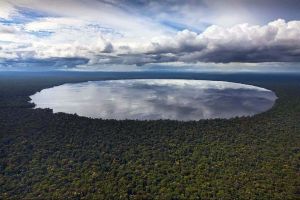
57c39dba4d22dca525cc4aad3bcfffa2Japanese trailblazers trekked to the exotic continent in 1988. Their goal was to capture footage of the fabled Congo inhabitant. Jose Bourges, a renown environmental official, led the expedition. While filming areal footage over Lake Tele, a videographer noticed something anomalous beneath the plane. He examined the strong wake and attempted to focus on whatever was creating this disturbance. Unfortunately, in his eager and excitable state, the cameraman did not initially remove the lens cap. Ultimately only fifteen-seconds of footage was captured. Viewers of the brief clip are torn: some believe it’s merely an elephant, others feel something entirely different was recorded.

Writer Rory Nugent visited Africa to study the world’s largest swamp. In December of 1985 he spotted a peculiar form moving across the lagoon. Closer inspection revealed it was in fact the legendary critter. Nugent moved his boat to get a better view and watched in fascination while taking several photographs. Before he could get closer look accompanying Congolese guides demanded him to stop at gunpoint. Back at camp they instructed him to destroy all the film which had been shot. Due to superstitious beliefs, locals felt that keeping the pictures would anger Mokele-mbembe and put them in great danger.    

beautiful-cascade-creek-460621Doctor Roy Mackal, biochemist and evolutionist, dedicated his life to the pursuit of cryptozoology. Mackal was determined to prove the existence of supposed African dinosaurs. Interviews were conducted with tribes throughout multiple nations. These groups had no communication with each other nor the outside world. However, each person shared identical descriptions of the creature ranging from physical appearance to behavioral traits. During another excursion he presented flashcard illustrations to dozens of residents. Some were familiar, such as hippos, others like American black bears were completely foreign. They recognized domestic inhabitants but could not identify overseas varieties. Shockingly, when shown a rendering depicting a brontosaurus, they positively identified the sketch as Mokele-mbembe.

Science teacher Peter Beach was determined to uncover tangible proof of the shy vegetarian. Whilst exploring a muddy shoreline in 2006 he stumbled upon abnormally large footprints with prominent claws present. Surrounding canopies with abundant foliage had been completely stripped at heights in excess of eighteen feet. Giraffes, the only reasonable culprit, do not occupy this part of the country. Perplexed, Beach took snapshots to document his peculiar findings. Plaster castings were made from the unique impressions. Further analysis of the tracks has brought forward more questions than answers.
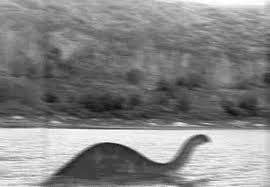
images.jpegBy 2009 researchers once again undertook the quest for Mokele-mbembe. Credible informants relay that during dry seasons the cryptid hides in natural caves. Air passages are dug along the riverside and eventually dry out becoming similar to concrete. Such structures ensure they have ample air supply to last through lengthy hibernative states. Investigative parties located several of these formations along the muddy embankment. Implementation of a fish finder provided further fascinating discoveries. Numerous serpentine figures moved below the dismal depths. Experts were extremely baffled by the specimens’ astonishing size. Unfortunately, severe thunderstorms forced the team to abruptly abort their mission before definitive data could be obtained.

Much of the Congo remains unseen by human eyes. Earth’s final frontier is filled with dangerous predators, deadly insects, armed militias and extreme weather. Such factors cause much hindrance on further exploration of this rugged terrain. It was not until 1998 that the four-thousand pound Javan rhino was recognized. Only five years ago, in 2013, a quarter-ton pygmy tapir was positively identified. It’s entirely plausible that an unknown species is avoiding detection within the depths of Africa. However, until hard evidence surfaces we can only theorize and evaluate spectators’ testimonies. For now Mokele-mbembe will remain one of the world’s greatest mysteries.


Do you think it’s possible that dinosaurs still exist? Share your thoughts in the comment section!